Combat PTSD and Intimacy: Addressing What No One Talks About
There’s a particular silence that settles into a lot of military marriages, and it lives in the bedroom. The distance neither of you names. One of you lies awake wondering “am I not attractive anymore? Do they still want me?” The other feels broken, pressured, or just… numb, and says nothing, because what is there to say?
This is one of the most common effects of combat trauma, and one of the least talked about. So let’s talk about it — plainly, and without making either of you the problem.
First, the part you both need to hear
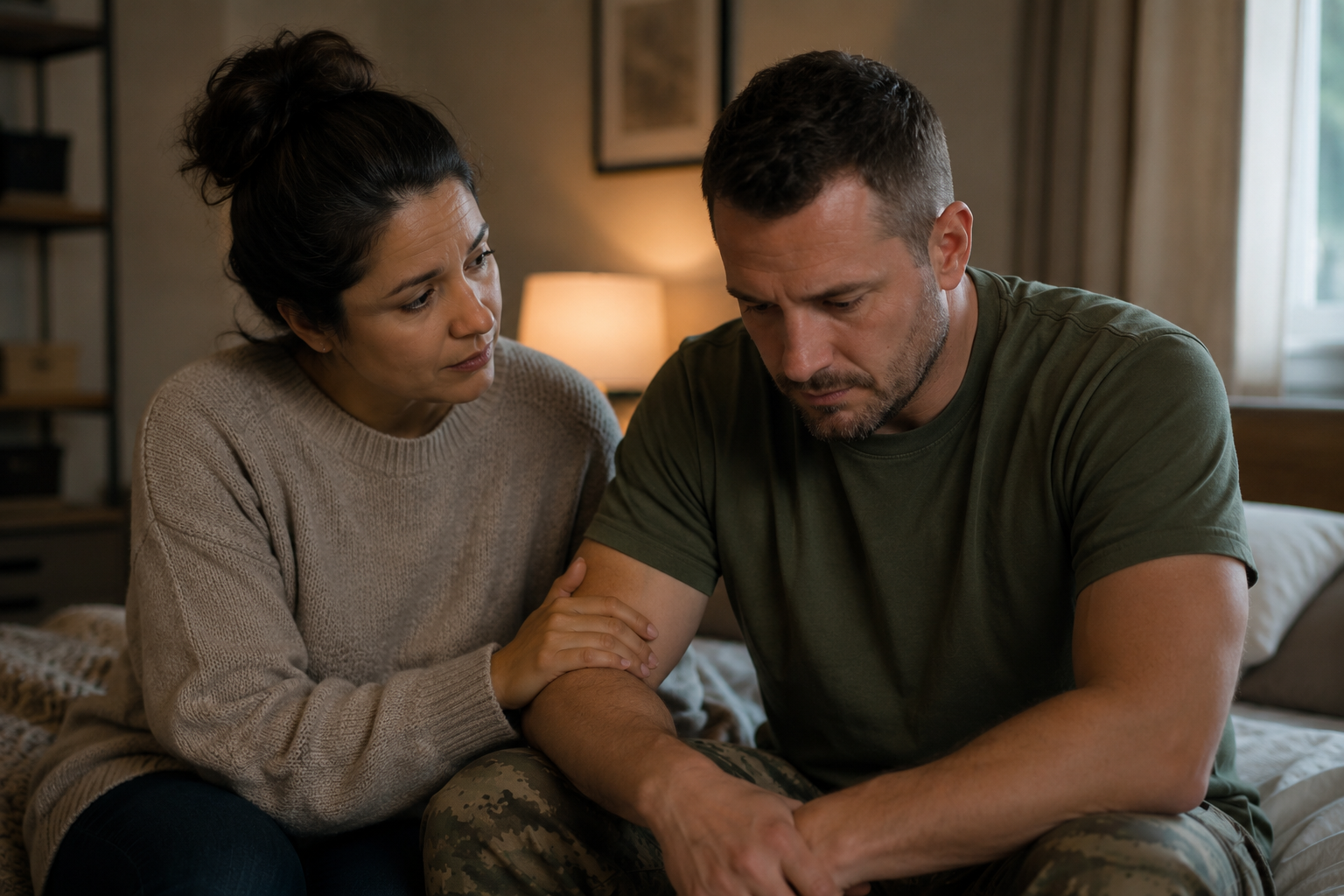
Your partner didn’t stop loving you. You are not undesirable. And neither of you is broken beyond repair.
Intimacy struggles after combat are not about attraction or character. They’re about a nervous system that learned to survive and is having a hard time shifting gears toward closeness, and a partner wanting closeness but feeling the distance. Once you understand that, you can stop reading it as rejection and start treating the actual problem.
Why combat PTSD interferes with intimacy
A few things are usually tangled together here:
Hypervigilance. A body that can’t fully drop its guard can’t relax into closeness. Being touched unexpectedly, approached from behind, or feeling physically vulnerable can register as a threat — even in a safe bed.
Numbing. The same emotional shutdown that dulls the pain of trauma also dulls pleasure, desire, and connection. You can’t selectively numb.
Hyperarousal and shame. Irritability, anger, and a deep sense of not deserving good things — often tied to moral injury — make vulnerability feel dangerous.
Medication. Some medications that help with PTSD, anxiety, or depression can lower libido or affect function. If that’s in the mix, it’s worth an honest conversation with the prescriber — not silent self-blame.
For the partner. Years as the household’s emotional manager, simmering resentment, and your own secondary trauma can quietly erode desire too. Exhaustion is not a mood-setter.
What doesn’t help
Pressure, ultimatums, and pretending it’s fine all make it worse — and so does treating sex as the only measure of intimacy. When the bedroom becomes a performance review, avoidance climbs on both sides.
What starts to help
Lower the stakes. Reconnect outside the bedroom first — touch, closeness, and feeling safe together with no expectation of where it leads. Safety and co-regulation come before desire, not after. Safe and trusting conversations build the foundation for safe and trusting sex.
Talk about it without blame. “I miss you and I miss us” lands better than “what’s wrong with you?”
Treat the root, not just the symptom. When the underlying trauma gets processed — through individual work like EMDR or Accelerated Resolution Therapy (ART) — the body can start to feel safe enough for closeness again.
Work the cycle as a couple. Intimacy is far more than sex; it’s meeting each other’s emotional needs. Couples therapy helps you both break the pursue-withdraw, pressure-avoid loop and rebuild trust and connection.
Be patient with the timeline. This rebuilds in steps, not all at once.
If intimacy has been diminished in your marriage, you don’t have to keep white-knuckling around it. A free consult is a discreet place to start.
This is more common than you think
I’ve sat with many couples who were certain they were the only ones dealing with this — and certain it meant the marriage was over. That does not have to be the case. The research on PTSD and relationships is clear that intimacy and sexual difficulties are common after trauma, which means there are real, well-worn paths back. You’re not the exception, and you’re not out of options.
Where to start
Couples therapy at Rose on Rainier addresses intimacy, trust, and connection directly, for military and first responder couples, in Colorado Springs and online across 43+ states. Often the most effective approach pairs couples work with individual trauma processing — and intensives are available when you want focused progress faster.
Ready to close the distance? Schedule a free consult.
This post is educational and isn’t a substitute for therapy or a diagnosis. If you’re in crisis or thinking about harming yourself, call or text 988 and press 1 to reach the Veterans Crisis Line.
Dr. Bartel specializes in combat trauma and PTSD treatment for military service members, veterans, and their spouses and families. She provides in-person therapy in Colorado Springs and telehealth services across 42+ states.