

AVAILABLE IN-PERSON & ACROSS PSYPACT ELIGIBLE STATES
Couples Therapy in Colorado Springs, CO
You’ve survived this long. Now it's time to thrive together.

You’ve been through more than most couples will ever relate to.
The military has asked a lot from both of you—years of sacrifice, years of separation, and years of carrying responsibilities, burdens, and experiences that completely dictated your relationship.
Now, life at home has left you both staring at the aftermath: resentment, loneliness, anger, infidelity, parenting battles, emotional distance, or the sinking feeling that maybe this all wasn’t worth it.
You argue about the difference in responsibilities at home, how the kids are treated, what you’ve sacrificed, the demands of home life vs. operator life, the chasm between you as you’ve changed, life after the military, or how to talk about or handle emotions. It seems like you can’t take a step right now without setting off your partner.
You know a lot of military couples who are unhappy or who didn’t make it. Maybe you've watched them divorce and wondered if they were the lucky ones, because sometimes leaving seems so much easier than staying.
But something is calling you to stay and fight.

What if it’s not just a communication problem?
One of the most common things I hear from military spouses is, "He does not care about my feelings. He just explodes. I don’t think he even knows who I am anymore." And one of the most common things I hear from operators is, "I don't think she gets how hard I've tried. I constantly feel like I’m failing my family."
There is a chasm between you, and right now it seems impossible to cross.
You both feel deeply misunderstood. You miss your best friend, but you also miss yourselves.
Most couples believe they have a communication problem. More often, I find they're carrying grief. There’s grief for years lost, the relationship they thought they’d have, and even previous versions of themselves. When that grief goes unrecognized, it often shows up as resentment, anger, criticism, distance, hopelessness, or feeling like roommates instead of partners. Part of our work is making space for those losses, understanding how they've shaped the relationship, and deciding together what comes next.

My approach
Military relationships play by a different set of rules.
These careers are not like the others. Few other jobs ask such extensive commitments from their employees, as well as their entire families, and under extremely hazardous conditions. There is no clocking out, and there is a high exposure to injury or death. Service, combat, repeated separations, frequent transitions, and extended time carrying independent burdens also uniquely shape the way military couples relate to one another. This is why so many couples find themselves stuck in a painful cycle where they feel misunderstood, unappreciated, and alone.
Couples often react to the meaning they've assigned to their partner's behavior—not necessarily the intention behind it. What a spouse experiences as emotional withdrawal, an operator may genuinely believe is protection. What an operator experiences as criticism, a spouse may experience as a desperate attempt to finally feel seen.

Together, we'll slow those moments down, identify the dance you are stuck in, develop a deeper understanding of what each of you is actually trying to communicate underneath the conflict. You will learn a new, more intimate dance: how to give and receive comfort.
At home, comfort is protection. Military life teaches people how to protect through action, sacrifice, problem solving, and provision, and spouses have ample practice running a household without support. So how do two independent people give and receive comfort? Successful relationships need curiosity, vulnerability, reassurance, and emotional presence. Learning how to give and receive comfort can completely change the way a couple experiences one another.
Emotions are a liability in combat, and exactly what you need to save your marriage and build fulfilling relationships.
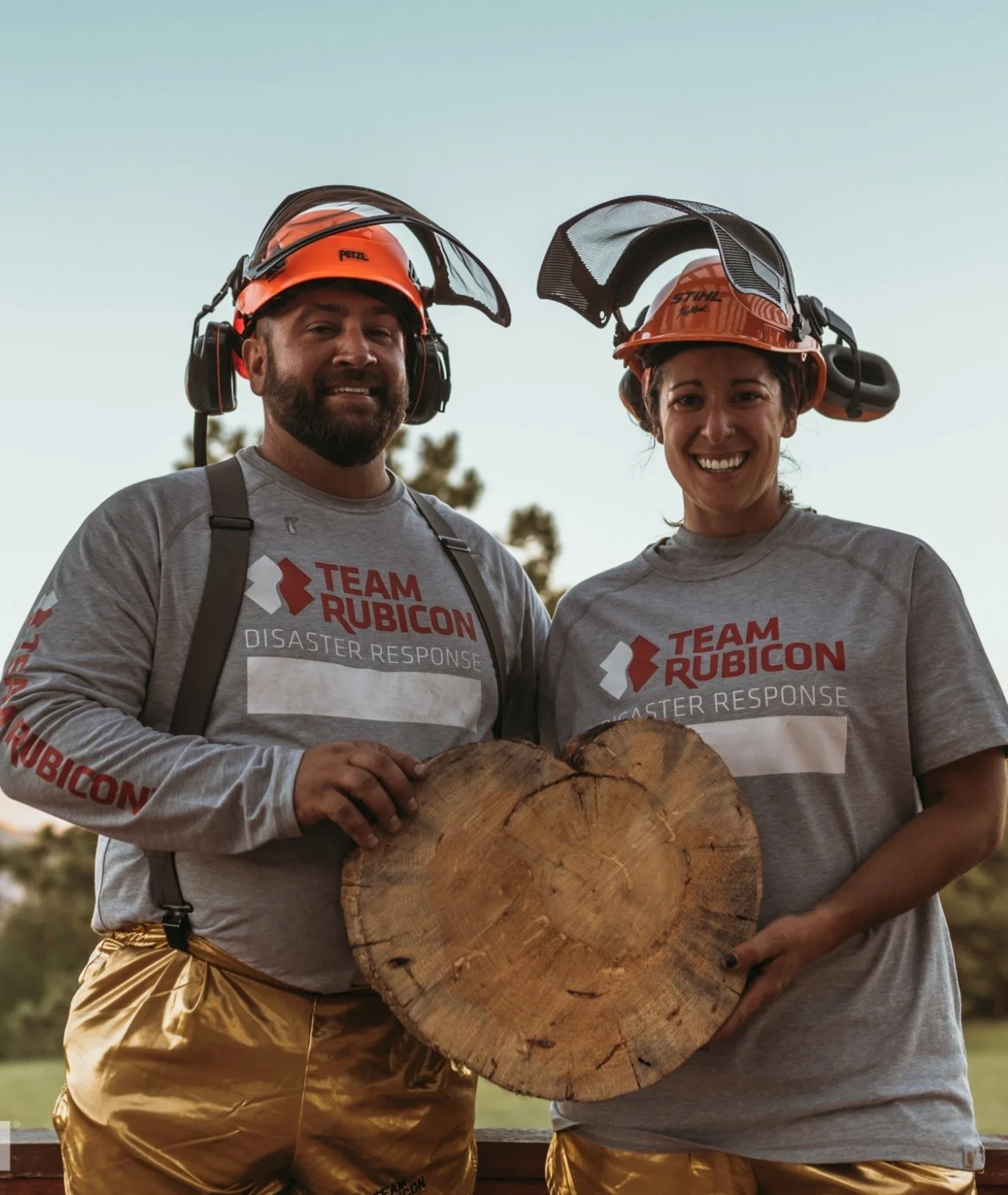
THIS WORK IS PERSONAL FOR ME.
As a trauma psychologist married to a combat veteran, I often wondered, "If this is hard for me, how hard must it be for couples without this clinical training?"
Even I have checked Zillow at 1am wondering if I could afford my own 1BR apartment (the answer is no, not in Colorado Springs). Sometimes you just feel stuck. Trust me - I get it.
What I've learned is that military relationships, especially to combat veterans, often need something more than standard relationship advice: they need specialized care. I’m proud to offer that support so couples can better understand what's happening, reconnect with one another, and build the relationship they want moving forward.
What couples learn from therapy together…
Your partner isn't actually the enemy.
Conflict doesn’t have to become interrogations or personal attacks.
PTSD is an intruder in the relationship; it does not define you or your partner.
Vulnerability isn't weakness—it's the fastest route back to connection.
Comfort is one of the most powerful things you can offer another person.
The argument usually isn't about what you think it's about.
Shame loses power when it has somewhere safe to go.
You can grieve what military life has cost without giving up on the future.
It's possible to feel understood again.

Every battle has a target. Let's make sure you're both aiming at the right one.
FAQs
COMMON QUESTIONS
-
This is understandable considering military life frequently punishes or mocks vulnerability. For many operators, vulnerability can feel uncomfortable, unfamiliar, or even unsafe. It is a mission with no clear outcome, directive, or purpose. Sometimes they worry they'll be seen as less of a protector, or they don't want to burden the people they love. They often don't even have words for what they're experiencing.
If they’re willing to come to couples therapy at all, that can actually be a huge step toward vulnerability, so that’s where we’ll start.
-
Yes. Infidelity is one of the most painful experiences a relationship can go through. It often leaves one or both partners carrying a tremendous amount of hurt, anger, confusion, and grief. While every situation is different, many couples are surprised to learn that healing isn't simply rebuilding trust—it's about taking accountability, learning what the relationship needs moving forward, and ensuring that both people are willing to do whatever the work may call for. There is hope, and it often leads to an even stronger relationship.
-
Spoiler alert: yes. If there is a clinical trope in my office, it is this one. Our earliest relationships teach us a lot about trust, conflict, vulnerability, comfort, and connection. Those lessons tend to show up in marriage, whether we realize it or not, so while we don’t go looking to blame the past, understanding how it shaped you will help us see how things may be influencing the present – and what we can change moving forward.
-
You don't need to have that answer before coming to therapy. Some couples come in knowing they want to fight for the relationship, while others aren't so sure, or you each differ in where you stand. As a therapist, I recognize and support couples navigating a rough chapter and those ready to end the story. Couples therapy can help create enough clarity, understanding, and honesty for you to make that decision thoughtfully rather than from a place of exhaustion, resentment, or hopelessness.
-
That’s pretty typical. It's rare for both partners to show up feeling equally hopeful, equally motivated, or equally convinced therapy will help. One person usually has been thinking about therapy for years, while the other is showing up because it may be the last resort.
That's okay. You don't have to be on the same page, but you both need to show up and commit to the process. We can start with where you both are and go from there.
-
Military relationships are my bread and butter. I earned my Master's and PhD in Clinical Psychology with a trauma emphasis, completed training in military and veteran-focused settings, including Fort Carson and VA Medical Centers, and have spent years helping service members, veterans, and their families navigate the unique challenges military life can place on a relationship.
I also live it. I'm married to a combat veteran, which has given me firsthand experience navigating similar challenges. I like to say this is where I got my second PhD. That combination of clinical expertise and personal experience allows me to more deeply understand the unique challenges military couples face, particularly the emotional whirlwind yet total disconnection, being home but not present, feeling alone yet always needed, trauma in both partners, parenting, intimacy, and the transition into civilian life.
-
Therapy is an intensive process, especially with two people involved. It takes quite a few sessions to uncover the individual and relational dynamics as well as to change well-established patterns. A typical trajectory to plan and budget for is:
Initial Investment -
1 90-min couples session: $550 (the dance, and immediate skills to break the dance)
2 60-min individual sessions: $530 (anything else I need to know; individual childhoods & relational history)
1 90-min couples session ($550): revisiting the dance, a few specific traumas/griefs in the relationship
2 90-min individual sessions ($850): ART each partner
1 90-min couples session ($550): revisiting the dance after ART sessions; next steps
Total: $3,030 (8.5 direct clinical hours, plus homework, readings, skills)
Often, at least one additional round is recommended to more comprehensibly address the challenges and establish long-term success. It takes time and commitment to change years of ingrained habits. We can discuss feasibility and logistics in the consultation call.
-
This is a common challenge with the couples I see. PSYPACT allows me to practice in up to 43 states (map link), so as long as both individuals are located in one or two of those states, we can meaningfully commit to the work and minimize travel disruptions.