

AVAILABLE IN-PERSON & ACROSS PSYPACT ELIGIBLE STATES
Therapy for Military Operators in Colorado Springs, CO
Command got you here. Connection comes next.

“Coming back” wasn’t part of the training. You weren’t even sure you would.
You spent years learning how to operate under pressure, suppress discomfort, perform in chaos, and do anything necessary to accomplish the task at hand. Your skills have won trust, earned promotion, and saved lives.
Your days were spent under a kind of stress you have to live to understand. Keeping yourself and the people beside you alive was all that mattered. The long game, coming home, and finding your way after, was the part nobody prepared you for. The very skills you pride yourself on in service, change the kind of person and partner you become.
The guilt of surviving. Coming back to the home and people you had to step away from. Even the news of another suicide after you'd already made it out. It all feels like another battle you have grown weary of.

What you didn’t learn is how to step back into a world that you effectively left.
How do you navigate a home life that feels harder than the battlefield?
How do you reconnect with a spouse after years of deployments and emotional suppression?
How do you comfort your kids when you've spent a career at the pinnacle of discomfort?
How do you find purpose and fulfillment after leaving a role where you got to do some really cool shit? That demanded absolutely everything from you, and you gave it?
How do you seek help when you’re the one everyone else relies on? Who protects the protector?
How do you exist in a life you thought would end over and over again?
Maybe YOU’RE HERE BECAUSE…
You're angry more often than you'd like to admit.
The smallest inconveniences trigger big reactions.
You miss the team, having an assignment, or some real sense of purpose.
Home feels so much harder than deployment ever did.
Everything feels so overwhelming.
Everyone cares so much about things that feel insignificant (and you just don’t get it).
You know you have skills, but they don’t seem to transfer to this world.
Nobody seems to care what you’ve done in your military life.
You've lost interest in things you used to enjoy.
You feel like you're constantly disappointing the people you love.
Something isn't working, but you can't put your finger on what.
You don’t want to be the next suicide.
The answer to “why” you’re feeling this way is often simpler than people think:
You've been trained extensively for one environment and almost not at all for the other.

My approach
You’re not who you were before service, but trauma doesn’t have to be your story.
Military operators are incredibly good at paying attention to what's happening around them, but far less accustomed to paying attention to what's happening within them. This work is often about applying curiosity and awareness to assess things in the home and in your relationships—without suppressing them. Essentially, before we decide what needs to change, we need to understand what we're actually dealing with and how we got here.
I think of therapy like working on a puzzle with no picture on the box. We're turning over pieces one by one, looking for patterns, identifying connections, and figuring out what belongs where. What initially feels random or disconnected starts to make sense. Once the picture starts forming, we see the threads running through each of our experiences, relationships, and reactions. My job is to help us pull the right threads at the right time.

This process helps narrow the focus and make change more achievable. Depending on what you need, that may involve processing trauma, strengthening relationships, navigating a major life transition, rebuilding trust, or addressing moral injury. We shift between learning new skills and performing deeper work that make those skills more successful.
Most people aren't looking, and don’t need, to become a different person. What they do want is to feel less angry, less overwhelmed, more connected to the people they love, and more confident about where they're headed next. You do not have to lose your military identity to find yourself beyond it.
Many operators assume this is just how life is now— that feeling disconnected, angry, restless, or stuck is simply the price of their service.
I don't believe that.
WHAT IF…
Home became a place you wanted to be, not just a place you return to.
You could acknowledge what military life cost you and your family without feeling burdened by guilt or shame.
You stopped feeling like a stranger in your own life.
You could make decisions based on what you want to do rather than what you believe you should do.
You stopped feeling like a burden or completely inadequate at home.
Anger wasn’t the only emotion with a microphone.
You discovered another sense of purpose in addition to your military career.
The people you love no longer felt like another responsibility to manage.
You had a clearer field guide for how to connect with your spouse and kids.
You didn’t have to abandon what made you great in the field to feel valuable at home.
This isn’t wishful thinking or unrealistic expectations. They're the transformations I see happen when operators have intentional support and clear direction to help them understand what's happening and how to address it.
You’re used to clear objectives, measurable success, and defined procedures as a means of survival. Therapy can give you that same structure for relationships and connection.
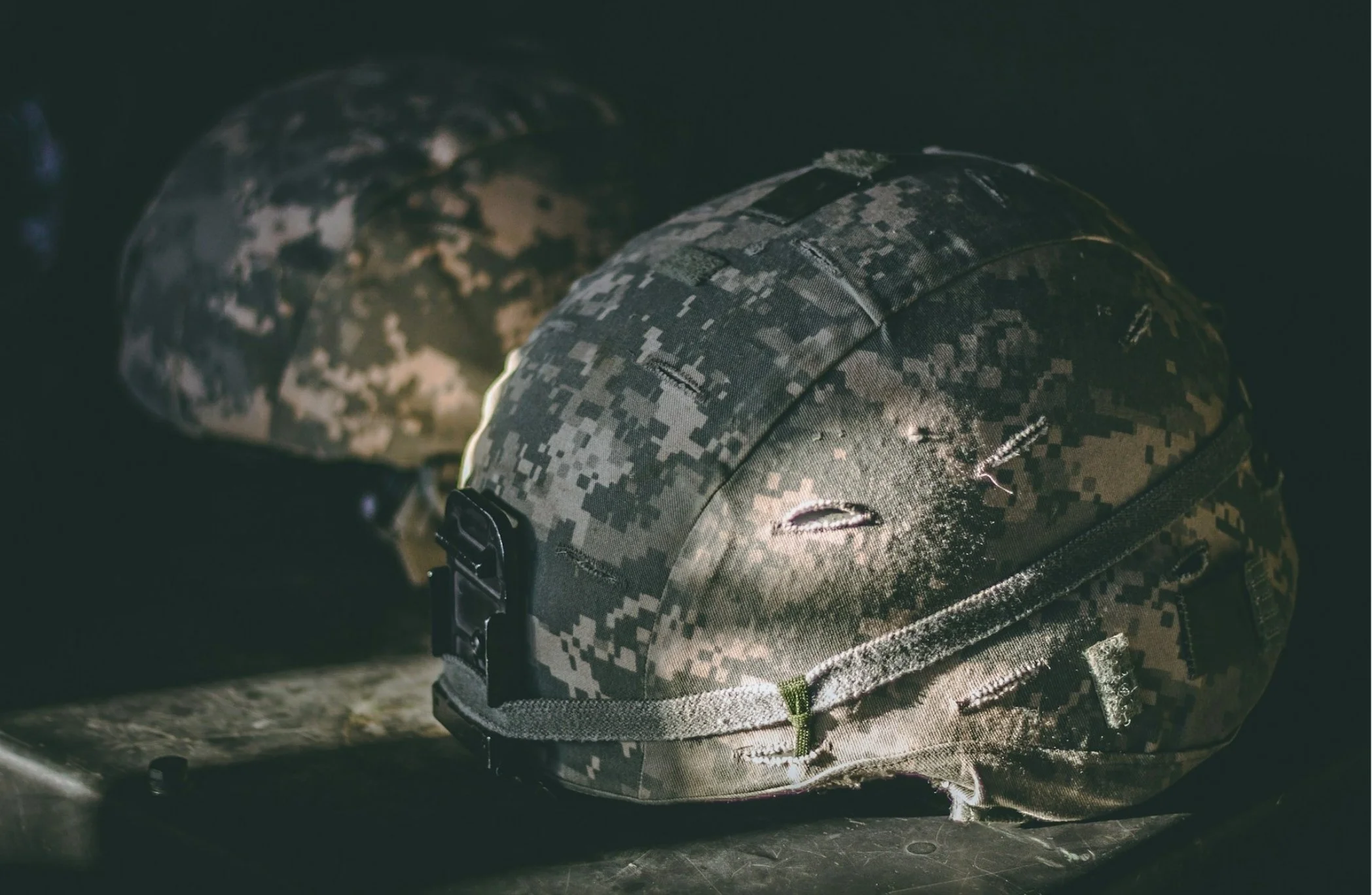
You will always be a warrior. You can be a father and a husband too.
FAQs
COMMON QUESTIONS
-
This is one of the most common questions I hear. The answer isn't that you're incapable—it's that you're trying to solve a problem outside your expertise. Military service teaches you how to lead, perform, and survive under specific kinds of pressure, and usually to minimize emotions to do it. Vulnerability can have dire consequences. What it doesn't teach you is how to navigate grief, marriage, parenting, retirement, or major life transitions - which require vulnerability. You attended trainings and schools to learn how to do those hard things; therapy is another opportunity to learn how to do a different kind of hard thing.
-
Moral injury occurs when experiences challenge your beliefs about right and wrong, trust, responsibility, leadership, or humanity. It often shows up as guilt, shame, anger, disappointment, or disillusionment. While it can overlap with PTSD, typically it’s a distinct experience that deserves its own attention and care. The military built you into a warrior, but it chipped away at your identity and ethics as a person, partner, and parent to do so. Therapy helps you reconnect the pieces.
-
Most don’t. That's okay. Many clients come in saying, "Something isn't working." Part of my job is helping connect the dots so you can understand what's happening and where to focus your energy.
-
No. Our goal here isn’t to take away the qualities that made you successful—it’s actually the opposite. Leadership, discipline, resilience, loyalty, and responsibility are strengths. Therapy helps you learn how to apply those strengths in ways that support your relationships and overall well-being.
-
Most of my current practice supports past and present operators, from all branches and units. Working with military combat veterans and spouses has always been the focus of my career. I earned both my Master's and PhD in Clinical Psychology with a trauma emphasis, completed training in military and veteran-focused settings, including Fort Carson and VA Medical Centers, and have contributed to PTSD research.
I’m also the wife of a Purple Heart combat veteran and stepdaughter of a Green Beret, allowing me to understand many of these experiences at a deeper level and beyond clinical settings.
-
No. We move at a pace that feels right for you, but is still productive. This relationship goes nowhere without deep trust. Depending on your goals, therapy may involve discussing difficult experiences, but it doesn't require recounting every detail of your military career or trauma history.
For clients carrying specific traumatic experiences, I may recommend Accelerated Resolution Therapy (ART), an evidence-based approach that can help process difficult memories without requiring you to share every detail of what happened. You can learn more about my work using this method HERE.
-
Absolutely. Relationship challenges are one of the most common reasons operators seek therapy. Many clients want to improve communication, rebuild trust and intimacy, reduce conflict, and feel more connected to their spouse and family. You can learn more about my work with couples HERE, and how I support military spouses HERE.