Should Your Kids Know About Your Combat Experiences?
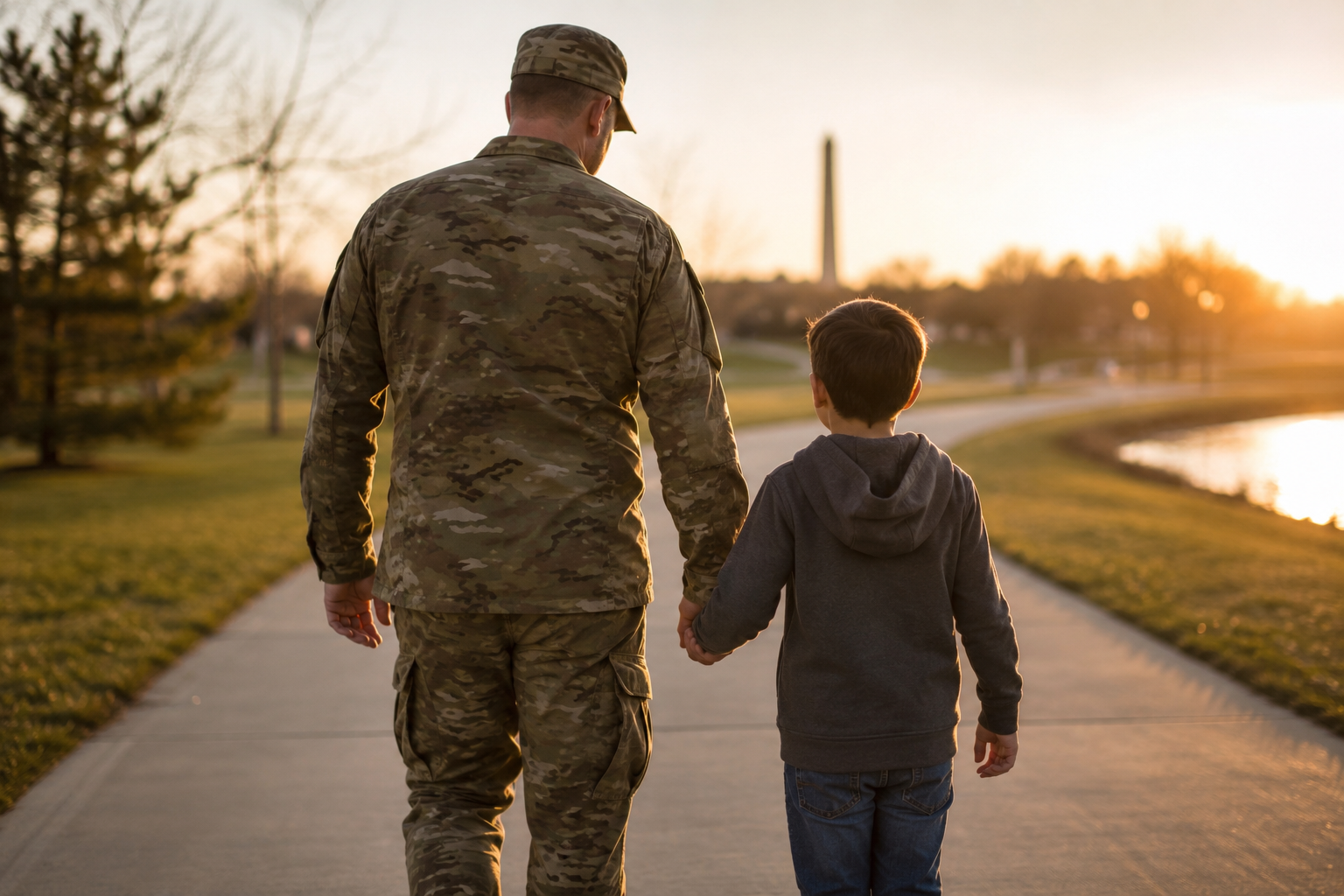
Sooner or later, your kid is going to ask (if they haven’t already). Maybe it’s “Daddy, did you ever shoot anybody?” at the dinner table. Maybe it’s a teenager who found something online and wants to know if it’s true. They rummage through your stash and find the canteen with hash marks. Your stomach drops. What do you say?
You don’t want to lie to them. You also don’t want to hand them your nightmares. So most veterans I work with do the third thing: shut it down, change the subject, and hope the question doesn’t come back.
It’s okay if you don’t want to or are not ready to talk about it. It’s also okay to share some of your experiences with them. This is the beginning of vulnerability, connection, and relational understanding.
You can protect them without staying silent.
Your urge to shield your kids from the worst of what you’ve seen isn’t avoidance. It’s love, and it’s good judgment. Some things are not theirs to carry.
But here’s what I’ve learned working with military families, and in my own personal family life with a combat veteran: kids always know something is different. They feel the tension, the bad days, the way you go quiet. They notice the stares off into the distance. They feel the shift when they ask a question that produces discomfort. And when you give them no story, they write their own — and children almost always cast themselves as the cause. “Dad’s angry and won’t tell me why” becomes “I must have done something wrong.”
Silence doesn’t protect them from the weight. It just leaves them carrying it alone, without context.
The real question isn’t whether — it’s what, when, and how much
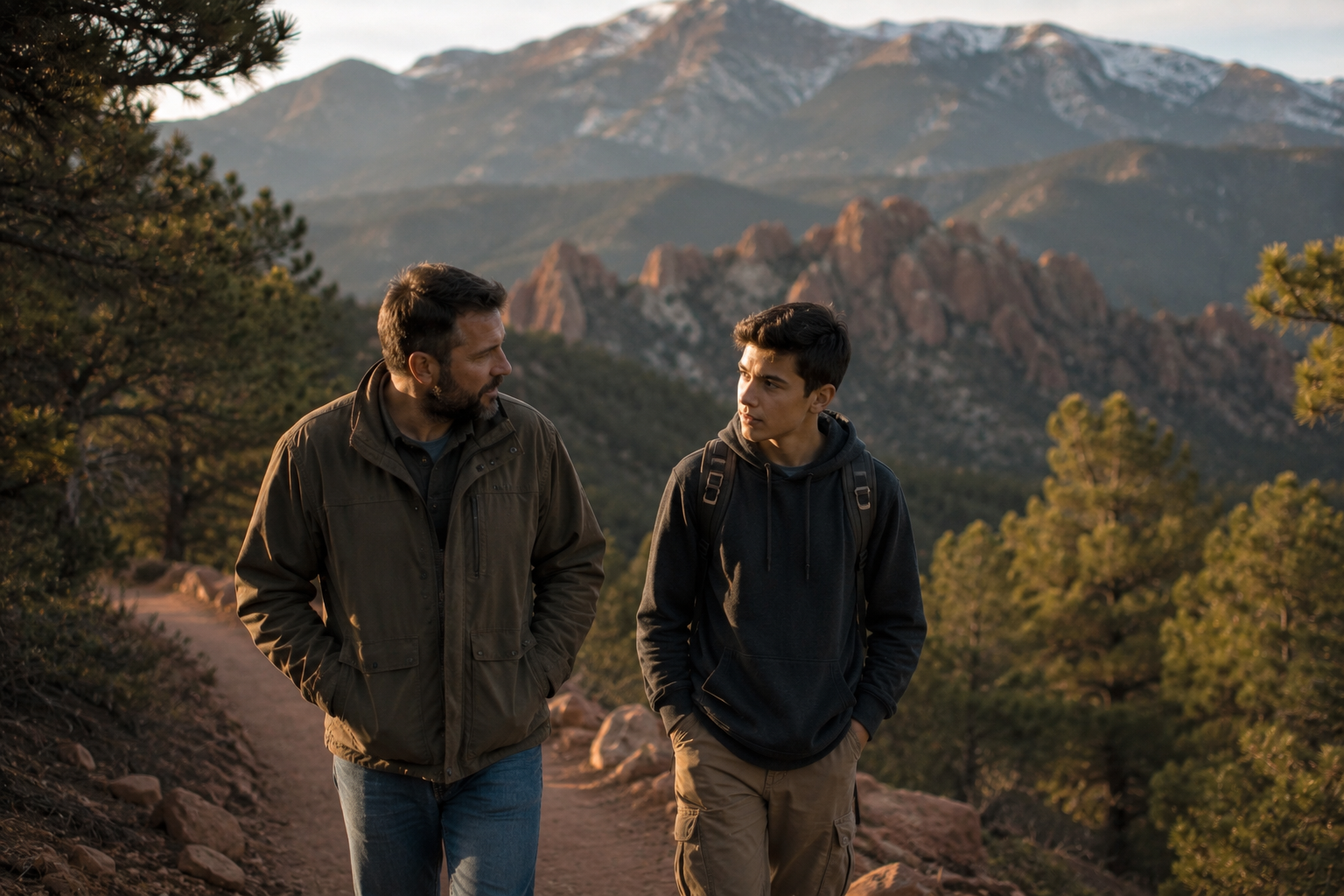
This was never a yes-or-no decision. You’re not choosing between telling them everything and telling them nothing. You’re deciding how much truth fits the kid in front of you.
The questions will come. It’s not if but when. So prepare in advance. Run the question through three quick filters:
Whose need is this serving? Sharing to unburden yourself is different from sharing to help them understand. The first one is what your therapist — or your team — is for.
Can they hold it? Match the detail to their age and their nervous system, not to your need to be honest in the moment.
What’s the meaning underneath? Kids rarely need the graphic facts. They need to know what it meant — that you served, that it was hard, that it changed you, and that none of it is their fault.
A rough guide by age
Little kids (under ~7). Keep it simple, concrete, and reassuring: “I had a dangerous job protecting people. Sometimes my brain still remembers the scary parts. It’s not your fault, and you’re safe.” That’s enough.
School-age (~7–12). They can handle more honesty, still bounded. You can name that people got hurt, that you lost friends, that some memories are hard — without the details. Let them ask questions, and it’s fine to say “I’ll tell you more when you’re older.”
Teens. They can handle context and moral complexity — the why behind the what. This is the age for values, hard choices, and the cost of service, if you’re ready. They can smell a dodge, so honest boundaries (“I’ll tell you about that part someday, but not yet”) land better than deflection.
Adult kids. Now it can be a two-way conversation. Sometimes telling an adult child is as much for your healing as for their understanding.
What’s okay to keep
You are allowed to hold things back. Operational details aren’t theirs. Images that would live in their heads for years aren’t theirs. “That’s something I keep for my therapist” is a complete, honorable answer — and it models that hard things get handled, not buried.
If you can’t talk about it at all, that’s worth noticing
Sometimes the reason you can’t find any words isn’t discretion — it’s that the memory is still raw and unprocessed in you. If even the simple version sends your heart rate through the roof, that’s a signal, not a failure.
That’s the work I do. Exposure approaches like EMDR and Accelerated Resolution Therapy (ART) help your brain file these memories where they belong, so they stop intruding on you. ART doesn’t require you to recount every detail out loud. When the you can recount the memory without emotional overwhelm, choosing what to share with your kids gets a whole lot easier.
If your kids’ questions land like incoming, a free consult is a good place to start.
Where to start
The goal isn’t a perfect script. It’s staying connected to your kids without passing them weight they can’t carry. Therapy for combat veterans and SOF at Rose on Rainier helps you process what’s underneath the questions, in person in Colorado Springs or online across 43+ states. Warrior Intensives are there if you want to move faster.
For age-appropriate resources, Sesame Street for Military Families and the VA’s family resources are solid starting points.
Want help figuring out what to say — and getting to a place where you can say it? Schedule a free consult.
This post is educational and isn’t a substitute for therapy or a diagnosis. If you’re in crisis or thinking about harming yourself, call or text 988 and press 1 to reach the Veterans Crisis Line.
Dr. Bartel specializes in combat trauma and PTSD treatment for military service members, veterans, and their spouses and families. She provides in-person therapy in Colorado Springs and telehealth services across 42+ states.