Should I Stay or Should I Go? When Military Marriages Reach Breaking Point
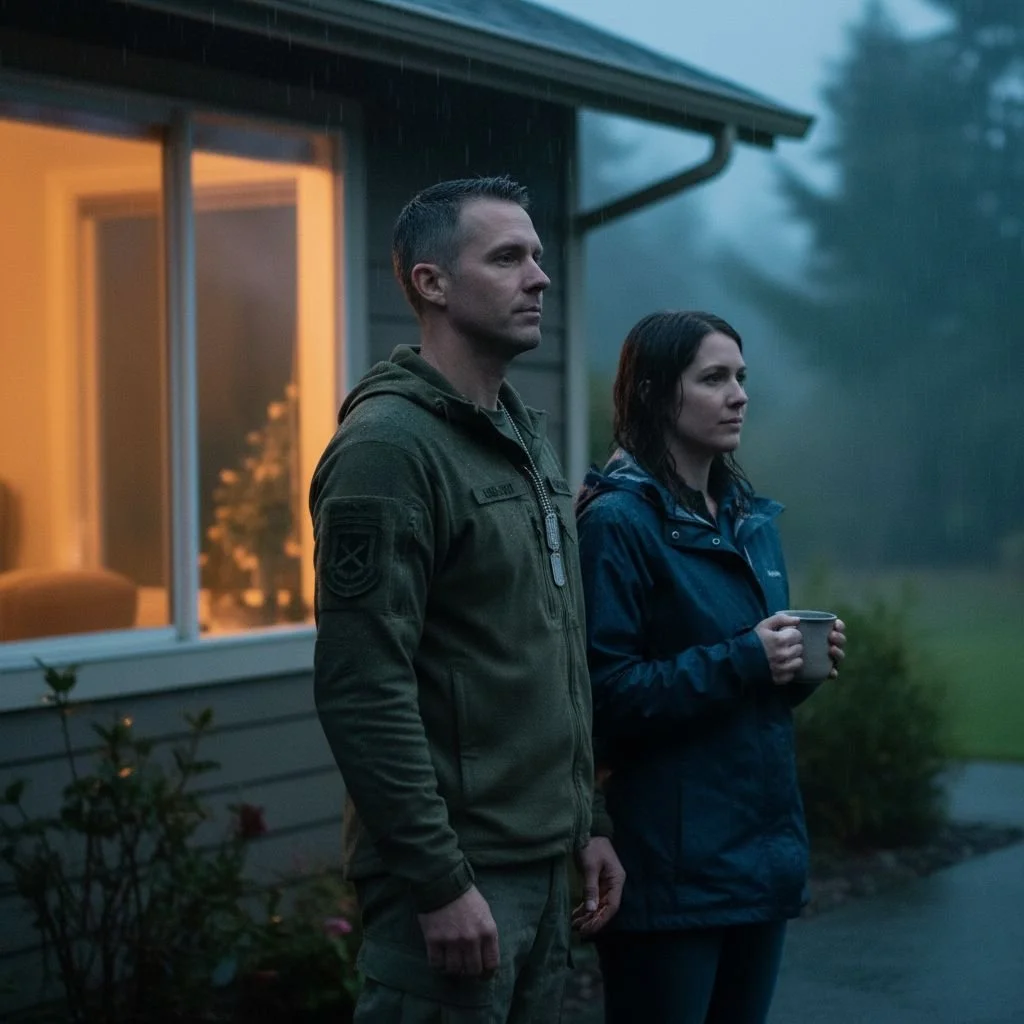
Marriage is hard work — even under the best of circumstances. But for military couples, the challenges are magnified. Long deployments, constant transitions, emotional shutdown after trauma, and the struggle to reconnect after separation can take a quiet toll.
Many veterans and their spouses find themselves asking the same painful question: “Should I stay or should I go?”
It’s a question most people never thought they’d face. You may still love your partner, yet feel miles apart. You may feel frustrated by the distance, the silence, or the endless cycle of fighting and withdrawing. Maybe you’ve tried therapy before, or maybe you’ve just been surviving — keeping the peace for the kids, for the unit, or because leaving feels like failure.
But deep down, you know something has to change.
This blog is for those standing at that crossroads — veterans and partners who want to understand what’s really happening beneath the surface, and what healing (or separation) might look like from a trauma-informed perspective.
When the Mission Becomes Survival
Life in the military shapes how you see the world — and how you relate to the people closest to you.
Combat, constant alertness, and the need for control all train the body to prioritize survival over connection. That training doesn’t disappear when you come home. Many veterans describe it like this: “I can handle chaos, but I don’t know what to do with peace.”
So when life slows down, when your spouse asks for emotional closeness, when small things feel overwhelming, your system goes on defense. The same instincts that once kept you alive now create distance in your marriage.
Your partner may not understand why you seem detached or angry. You may not understand why they seem needy or upset all the time. What’s actually happening is that both of you are fighting for safety — just in different ways.
Signs You Might Be Reaching a Breaking Point
Every relationship has hard seasons. But if you’re noticing patterns that don’t change no matter what you try, it may be time to pause and take an honest look.
Here are a few signs your marriage may be at a breaking point:
You feel like roommates, not partners.
Every conversation turns into an argument or total silence.
There’s more resentment than connection.
You’ve stopped hoping things can improve.
One or both of you are using work, alcohol, or avoidance to cope.
Intimacy — emotional or physical — has drastically decreased.
These patterns aren’t signs of failure. They’re signals that something deeper needs attention — often rooted in trauma, grief, or unspoken pain.
The Impact of Trauma on Relationships
When you’ve lived through trauma — especially combat trauma — your brain and body are wired to scan for danger, not for intimacy.
That means when your partner reaches out for closeness, your nervous system might interpret it as a threat, pressure, or loss of control. You might pull away, lash out, or shut down entirely.
For the non-military partner, this can feel deeply confusing. They may take your withdrawal personally, not realizing it’s your body’s automatic response — not rejection.
Over time, this creates a painful dance: one partner pursues connection, the other withdraws to stay safe. The more they reach, the more you pull back. Eventually, both are left feeling unseen and unheard.
The truth is, trauma doesn’t just live in one person’s body — it starts to live in the relationship itself. Healing, therefore, has to include both of you.
Should You Stay or Should You Go?
This question rarely has a clear or simple answer. Sometimes the healthiest thing is working to rebuild what’s broken. Sometimes, the healthiest thing is letting go with honesty and respect.
Here are a few reflections that may help you find clarity:
1. Check your emotional capacity.
Are you both able — and willing — to do the work of healing? That doesn’t mean everything has to be fixed right now. But if one person has emotionally checked out or refuses support, rebuilding may not be possible.
2. Assess safety — emotional and physical.
If there’s emotional abuse, substance abuse, or physical harm, getting to safety comes first. Healing can’t happen in an environment of fear.
3. Look beneath the anger.
What emotions are hiding under the surface? Grief, guilt, shame, and fear often show up as irritation or distance. Understanding the why behind the reactions is often the first step to real change.
4. Seek help that understands trauma.
Many couples try therapy but feel misunderstood because the therapist doesn’t “get” military life or trauma physiology. Working with a trauma-informed or veteran-specialized therapist can make all the difference.
5. Honor your humanity.
Whatever choice you make, know that needing peace or space doesn’t make you weak. Wanting to stay and fight for connection doesn’t make you naïve. You’re human. You’re allowed to want something different for yourself and your family.
What Healing Can Look Like
If both partners are willing, healing is possible — even after years of pain.
It might look like:
Learning how trauma shows up in your relationship
Practicing emotional regulation and communication
Rebuilding trust one moment at a time
Working through resentment and grief with compassion
Allowing yourself to feel — not just think — your way through
Healing doesn’t mean forgetting the past or pretending it didn’t happen. It means understanding it, so it no longer defines your every interaction.
Some couples find their way back stronger than before. Others part ways with mutual understanding and relief. Both outcomes can be forms of healing when approached with honesty and care.
If You’re at the Crossroads
If you’re reading this, you might already feel like you’re at the end of your rope. Maybe you’ve tried to fix things. Maybe you’re exhausted. Maybe you just don’t know what to feel anymore.
Before making any big decisions, take a breath. You don’t have to decide everything today.
What you can do is take the next right step — whether that’s reaching out for support, having an honest conversation, or giving yourself space to reflect.
Your marriage doesn’t have to be defined by the past. And neither do you.
Finding Support at Rose on Rainier
At Rose on Rainier, we work with veterans, active-duty service members, and their partners to untangle the impact of trauma on relationships. Through trauma-informed individual therapy, EMDR, and couples work, we help you make sense of the patterns that keep you stuck — and rebuild safety, whether together or apart.
If your marriage feels like it’s at a breaking point, you don’t have to face it alone. Reach out today to start your path toward clarity, peace, and healing — wherever it leads.
Dr. Bartel specializes in combat trauma and PTSD treatment for military service members, veterans, and their spouses and families. She provides in-person therapy in Colorado Springs and telehealth services across 42+ states.